From Arecibo Observatory to AC3
Arecibo Center for STEM Education, Computational Skills, and Community Engagement
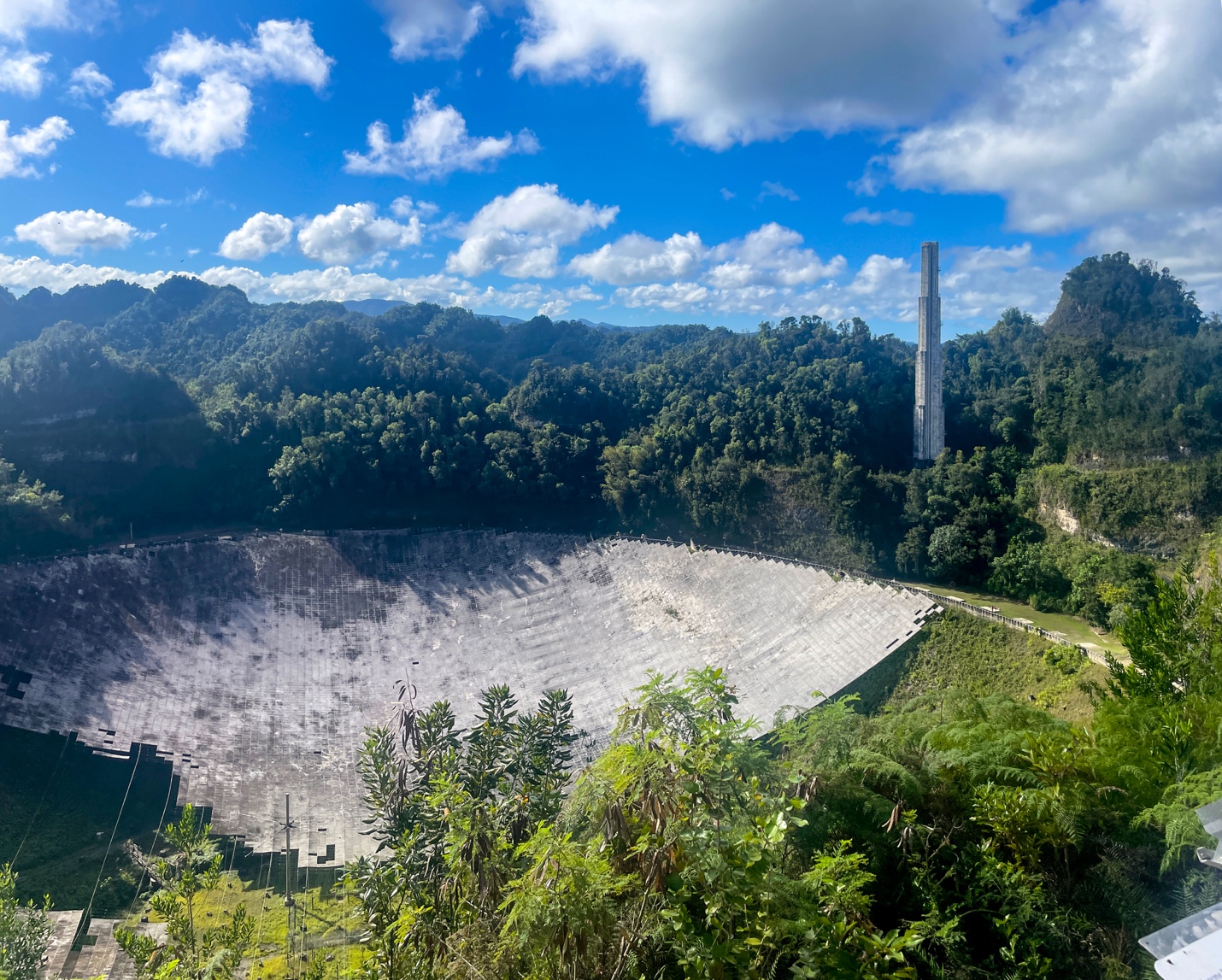
The IRC is thrilled to be working with Professor Patricia Ordóñez, Associate Professor of Information Systems at UMBC, and the Arecibo C3 team to develop a public media project that will symbolize the future of this historically significant and magical site.
“The center aims to create new opportunities for STEM education, exploration, discovery, engagement and participation of students, scientists andresearchers in various disciplines ranging from astronomy and radio science to biological, computer and natural sciences in Puerto Rico and beyond.” James L. Moore III, NSF Assistant Director for STEM Education
History
In the 1950s, the United States Department of Defense (DoD)’s Advanced Research Projects Agency (ARPA) sought new ways to detect missiles through Earth’s ionosphere. At Cornell University, Professor Gordon Williams proposed an ambitious solution: a massive ionospheric radar built into a natural sinkhole in the karst region of northwestern Puerto Rico. Completed in 1963, the Arecibo Observatory featured a 305-meter (1,000-foot) spherical dish embedded in the landscape. Because the dish could not move, a suspended, cable-supported Gregorian platform was designed to steer instruments and target specific regions of the sky.
Although conceived as a Cold War defense project, Arecibo quickly became one of the world’s most important scientific observatories. It mapped the surfaces of Venus, Mars, the Moon, and Mercury, revealed Mercury’s 59-day rotation, and provided vital radar data for tracking near- Earth asteroids. In 1974, Arecibo researchers discovered the first binary pulsar, whose orbital decay confirmed Einstein’s prediction of gravitational waves, work later recognized with the 1993 Nobel Prize in Physics.
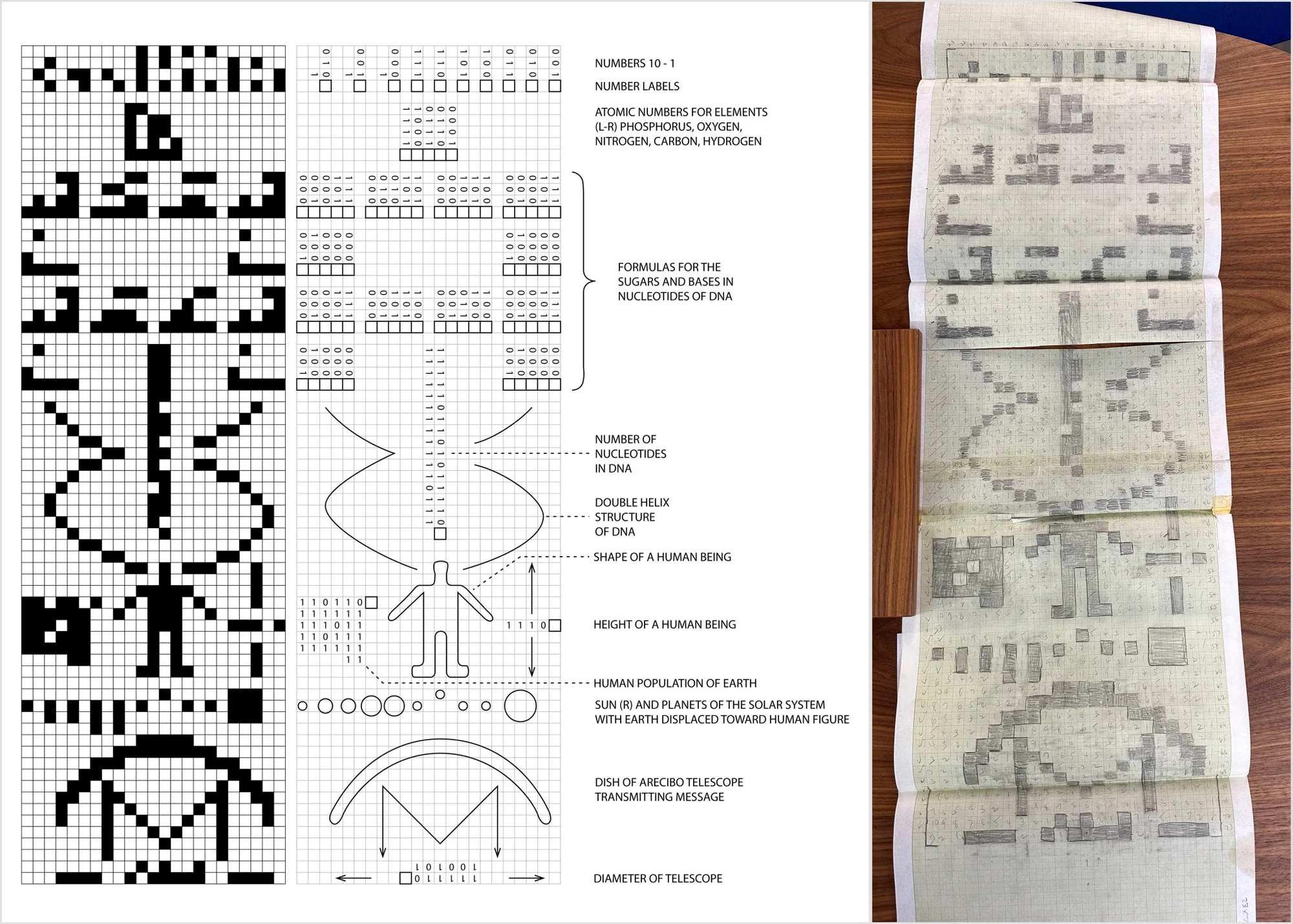
Arecibo also played a central role in the Search for Extraterrestrial Intelligence (SETI). In 1974, it transmitted the famous Arecibo Message toward the M13 star cluster, 25,000 light-years away, a symbolic demonstration of humanity’s technological reach. In 1992, observations at Arecibo successfully led to the first confirmed discovery of planets beyond our solar system.
Decommisioned
For 53 years, Arecibo was the world’s largest single-aperture radio telescope, until it was surpassed in 2016 by China’s FAST telescope. In 2020, the failure of key support cables forced its decommissioning, and the observatory collapsed on December 1, 2020. The structure, immortalized in films such as Contact (Jodi Foster) and GoldenEye (James Bond), was reduced to ruins.
In 2022, the National Science Foundation announced that the telescope would not be rebuilt. Instead, the site would become an cultural and educational hub. With more than $5 million in NSF funding, a partnership among Cold Spring Harbor Laboratory, UMBC’s Professor of Information Systems, Dr. Patrica Ordóñez, and the University of Puerto Rico established Arecibo Center for STEM Education, Computational Skills, and Community Engagement (Arecibo C3). The center now carries forward Arecibo’s legacy, fostering research, cultural exhibitions, STEM education, and public engagement for Puerto Rico and the wider world.


Future Of The Arecibo Observatory
Arecibo C3 will be a public center that will focus on scientific themes, research and innovations through new exhibitions, educational programming, science talks, films and enrichment activities for children, families, educators and the general public. A highlight of the science center will be an Arecibo Observatory Legacy Exhibition.
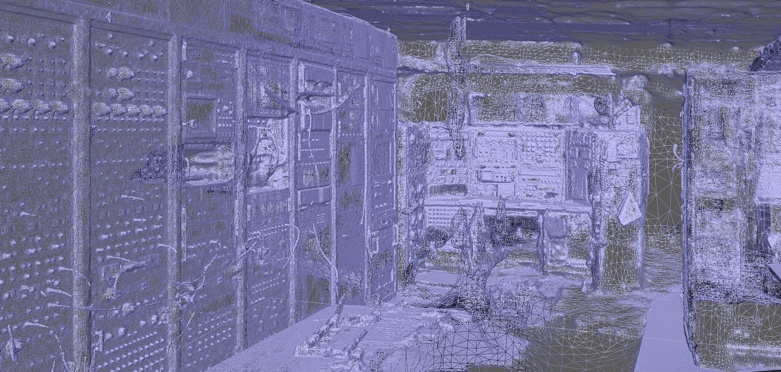
Inspired by this recent astronomical ruin and ancient ones such as Stonehenge and Chichén Itzá, the IRC will work with the Arecibo AC3 team to develop a unique media project. Stay tuned as the project develops.
Researchers and Creators
Project Investigators:
University of Maryland, Baltimore County (UMBC)
Maryland
University of Puerto Rico, Río Piedras
Puerto Rico
Jason Williams
Cold Spring Harbor Laboratory DNA Learning Center
New York
Art Direction: Lisa Moren, Director, Imaging Research Center
User Experience Scientist: Anita Komlodi, Associate Professor of Human-Centered Computing, Information Systems Department
Animation and Modeling Lead: Ryan Zuber, Technical Director, IRC Staff
Audio and Music Composition: Evan McRae, Technical Director, IRC C1 Staff
Data Programmer: June Young, Technical Director, IRC C1 Staff
Students
Graduate Student: Selin Büyükcengiz, Intermedia and Digital Arts, Department of Visual Arts