Everything we create demands a new perspective.
We believe large problems are solved at the intersection of the disciplines — especially when arts, sciences and humanities work together.
MISSION
The Imaging Research Center (IRC) is an interdisciplinary hub that fosters collaboration among UMBC faculty, researchers, fellows, and students across all disciplines. Emerging from an expanded definition of the visual arts, the IRC advances research through innovative media, emerging technologies, and curious collaborations. Its projects span 3D visualization, immersive technologies, interactive installations, feature-length films, social media, software, and mobile applications, producing original and innovative solutions that reflect the contemporary moment and serve the public good.
VISION
In a world where computers and imaging are ubiquitous and in the hands of everyone, the IRC advances new directions in media, creating new forms and approaches to urgent social and cultural questions. We bring together students, faculty, and researchers across disciplines to collaborate on projects spanning industry, scholarship, and the creative fields.
HISTORY
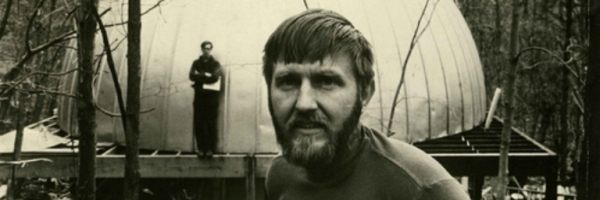
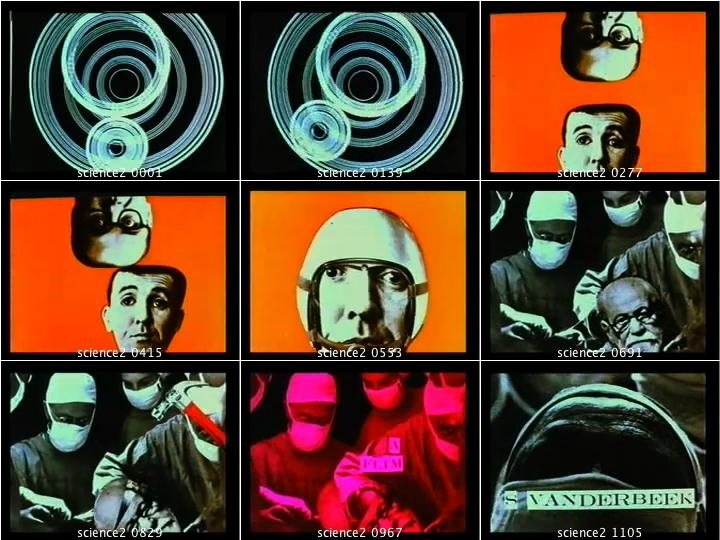
Electronic media artist working in expanded cinema, and computer-generated art at MIT and Bell Labs for projects such as Poemfields, Stan VanDerBeek , envisioned “the Image Laboratory” at UMBC in 1984. Just before he died, he said, “It seems that we’ve established our part of the future with the advent of the Image Lab.” This seed project, originally funded by Jim Henson of the Muppets and IBM’s Fulcrum grant project, evolved into the Imaging Research Center (IRC) by the early 1990s to develop a research facility to pioneer the future of art and technology. 40 years since VanDerBeeks vision, the IRC has grown into a major hub for interdisciplinary collaboration across all fields at the University.
By 1987, the new Chair of Visual Arts, David Yager also became Director of the Image Lab and placed it’s dedicated equipment in an unused large closet on the 2nd floor of the Fine Arts Building. The IRC envisioned high-end computers and emerging imaging technologies that were developed and available to scientists in Silicone Valley to be in the hands of artists. President Freeman Hrawbowski and David Yager visited CEO’s in Silicone to implement this vision.With support from IBM, Apple, Hewlett Packard, Polaroid and other corporations, the IRC eventually moved into a large area of the basement of the Engineering Building with offices and labs. With high-end input/out, the latest 3D Silicone graphics, time-based video and audio (including MIDI) and digital film recording onto 16mm and 36mm, the Image Lab was beginning to build projects creating experimental computer generated that met industry standard for films. Throughout the 1990s the IRC produced 3D simulations, immersive caves such as recreating high-end archeological projects of lost sites for the Museums, galleries and television such as the Discovery Channel and as the renamed “Imaging Research Center” by 1999 created the Cone Sisters’ Apartment Virtual Tour on permanent display since 2001 at the Baltimore Museum of Art. In 2003, the IRC moved into 7,000 sf retrofitted labs and offices in the basement of the new Information and Technology Building next to the IMDA, MFA program in Visual Arts allowing a fluid collaboration where graduate students and the IRC benefited from the research collaborations.
IRC formally established. Developed one of the earliest university-based centers devoted to digital imaging, visualization, animation, and interactive media. The center became known nationally for combining artists, programmers, scientists, and engineers.
From the early 2000’s on, external projects and partners included Baltimore Museum of Art, the National Science Foundation; NASA collaborations; Smithsonian, National Academy of Sciences, NASA visualization work; Discovery Channel’s,….. museum visualization projects; early scientific animation; creating biomedical animation, documentary and feature film productions; mobile and web applications, .;
This seed project, the Image Lab, originally funded by the Muppets and IBM, evolved into the Imaging Research Center (IRC) developed into a research facility that continuously pioneered media into the future. 40 years since VanDerBeeks vision, the IRC has grown into a major hub for interdisciplinary collaboration across all scholary and creative fields at the University with students, faculty, researchers and professionals working together to fulfill a vision that addresses social needs, and reflects our contemporary moment.
We bring together artists, humanists and scientists to create unique and provocative forms that respond to our cultural moment.
Research Areas

System Building
Software development | programming | creative coding | MLL’s data sets | APIs | AI apps | meta data

Immersive Environments
AR/VR/XR | spatial audio | video walls | installations | projection + mapping

Interface + Prototyping
3D scanning | fabrication | physical interfaces | UI/UX | motors | electronics | kinetics | sensors

Bio + Environmental
Bio-matter | bio-art | sustainable matter | global warming | climate | marine + sea levels

Media History
Archiving | rebuilding+ documenting | intermedia art | Immersive-caves | interactive | IRC + early prototypes

Community + Education
Social benefit | justice + equity | health | education curriculum + mentoring | community impact
Research and Partners
In addition to working with faculty researchers at UMBC, an R1 Carnegie-designated research institution, we collaborate with external entities that share our mission. Across UMBC, the IRC has worked with the Center for Urban Environmental Research and Education (CUERE), the Center for Art, Design and Visual Art (CADVC), the Institute for Harnessing Data and Model Revolution in the Polar Regions (iHARP), and the Center and Institute Departmentally Engaged Research (CIDER), Center for Interdisciplinary Research in the Creative Arts (CIRCA) and continues to unit researchers and Departments throughout all colleges at UMBC. Beyond UMBC, collaborators and supporters include: the National Academy of Sciences, the Baltimore Art Museum, the Walters Art Museum, the United Way, Maryland Historical Society, NASA-TV and the Goddard Space Flight Center, the Robert W. Deutsch Foundation, the National Science Foundation, and the National Human Genome Research Institute.
Education
Over the past three decades, hundreds of graduate and undergraduate students in the arts, humanities, sciences, and engineering have collaborated with faculty and staff on every phase of IRC research. The students learn that they are part of something bigger than themselves by building equitable and just partnerships that empower communities that aim to make a positive impact on the world. Students are included in project development discussions from the moment they join the center and develop portfolios that make them more competitive in the job market. Meet our students!


